
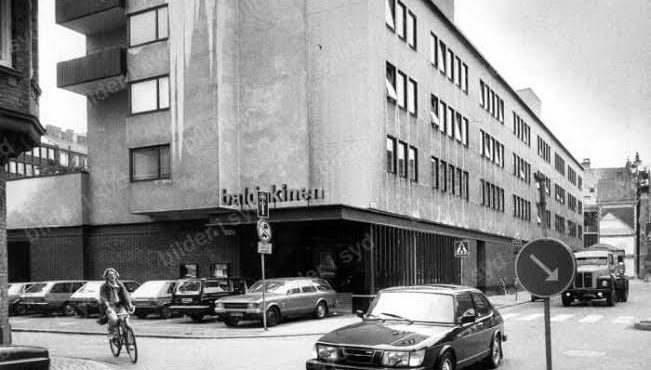
Baldakinen - make your move on the dance floor
BALDAKINEN, MALMÖ – WHERE THE CITY DANCED
A GO! editorial special on live bands, packed dance floors and the changing face of Malmö nightlife
A dance palace on Grynbodgatan
For a generation of Malmö residents, a night out at Baldakinen meant dressing up, meeting friends, ordering something from the bar and waiting for the band to strike up. Opened in 1971 on Grynbodgatan, Baldakinen was no modest neighbourhood dance hall. It was a large entertainment complex, with a restaurant, spacious dance floor and several bars. Local recollections put the premises at around 2,000 square metres—a sizeable playground for a city ready to dance.
The 1970s were made for venues like this. Live dance bands were a major part of Swedish popular culture, and a good orchestra could turn an ordinary evening into an occasion. People came in couples, in groups and sometimes with no plan beyond seeing where the music took them. The dance floor was where strangers became partners for three minutes, old friends caught up, and a well-timed chorus could make everyone forget what day it was.
The bands—and the dance-floor diplomacy
Baldakinen became known as a place where established dance bands played to enthusiastic audiences. Surviving recollections are stronger on the atmosphere than on a definitive list of every orchestra, so it would be misleading to invent a roll-call of performers. What is clear is that live bands were central to the venue’s identity: this was a place to dance to musicians in the room, not simply to a DJ behind a console.
A dance restaurant had its own choreography beyond the music. There were couples who knew every step, brave beginners watching their feet, and experienced dancers who seemed to glide through a crowded floor without spilling a drink. There were also the negotiations: who would ask whom to dance, whether one more song was acceptable, and how to return to the table without appearing to have spent the entire evening looking for someone special.
Local memories describe Baldakinen’s big floor, its bars and a section nicknamed the “gubbahyllan”—roughly, the old boys’ gallery. The nickname paints a picture without much explanation: a place where regulars could survey the room, discuss the band and perhaps offer unsolicited opinions on the dancers’ technique. Every legendary venue needs a corner where the unofficial critics gather.
A night out with a few surprises
Baldakinen was more than a dance floor. The restaurant made it possible to turn a few dances into a whole evening out, while the bars provided natural meeting points between sets. The building’s scale allowed different moods to coexist: diners at their tables, dancers waiting for the next number, and regulars who seemed to know exactly where they belonged.
Recollections describe the dance floor and tables as close enough for the music and audience to feel connected. A band did not need a stadium-sized sound system to make an impression. A good tune, a confident singer and a crowded floor could do the job perfectly well.
And, as at every dance palace, there was the eternal question: was the evening about the music, the food, the dancing—or the possibility of meeting someone? The sensible answer was all four. Baldakinen offered an entire social world under one roof, and no one needed to admit which part had brought them through the door.
The rise and fall of the dance restaurant
Baldakinen opened at a time when live dance entertainment had a strong place in Swedish nightlife. But by the 1980s and 1990s, tastes were shifting. Nightclubs, DJs, changing drinking habits and new forms of entertainment altered what audiences expected from a night out. A large dance restaurant built around live bands needed to keep reinventing itself to remain competitive.
By 1996, Baldakinen’s chapter as the city’s major dance restaurant came to an end. Yet the premises were too substantial—and the address too well known—to disappear from Malmö’s entertainment map. A new idea arrived, reflecting a different era of nightlife: dinner and a show.
Wallmans: dinner becomes the show
In 1996, Hasse Wallman’s entertainment concept moved into the former Baldakinen premises as Wallmans Salonger. The emphasis changed from a traditional dance restaurant to a dinner show, where food and live performance were woven into one experience. Instead of waiting for the next dance-band set, guests could enjoy a staged musical journey while performers brought the room to life.
It was a clever evolution. Audiences increasingly wanted more than a meal or a concert in isolation. They wanted an evening with a beginning, a middle and a finale—and perhaps a few surprises along the way. Wallmans’ performers could sing, dance and interact with guests, creating a more theatrical atmosphere than the old dance-hall format.
But the new era also encountered challenges. A nightclub called Schlagerbaren attracted late-night crowds, and neighbours complained about noise and disorder. In 2006, Malmö authorities withdrew the nightclub’s alcohol licence for service between 1 a.m. and 3 a.m. Wallmans tried to continue with the dinner show, but the economics became difficult. The company announced that its Malmö operation would close at the end of 2008, with the final show taking place around New Year 2008–09.
From dancing shoes to tapas—and beyond
After Wallmans closed, the large premises entered a long and uncertain period. The property was difficult to repurpose: it had few windows, a substantial floor area and a layout designed for entertainment rather than ordinary offices or small-scale dining. For a while, the empty venue stood as a reminder of how challenging it can be to give a large nightlife space a new identity.
In 2017, property owner Stena Fastigheter announced a new chapter for the historic premises, with Pinchos expanding its Malmö presence into the Grynbodgatan location. The app-based tapas concept was a world away from the dance restaurant’s live orchestras. Guests could order small dishes through a smartphone app, sampling several flavours instead of settling into the traditional restaurant format.
The building’s later history also reflects how commercial spaces evolve: a 2020 announcement reported that the former Wallmans premises had been leased to game developer Sharkmob for studio use. The precise current use of every part of the former Baldakinen complex should therefore be checked before publication. The broader story remains clear: the address has repeatedly been reinvented, from dance restaurant to dinner show and into new commercial life.
The music never quite leaves
Baldakinen’s rise and fall mirrors the changing rhythm of Malmö itself. In the 1970s, a large dance floor and a live band could be the centre of a weekend. By the 1990s, audiences were ready for a more theatrical night out. Later, app-based dining and digital entertainment brought another set of expectations.
Yet nostalgia for Baldakinen is not merely nostalgia for a building. It is nostalgia for the experience of going out together: hearing the band warm up, recognising a favourite song, watching the dance floor fill and deciding that the last dance could wait until the next number. It was a place where an evening could turn into a story retold for decades—and where the “gubbahyllan” probably had an opinion about every one of them.
The orchestra may have packed away its instruments, and the dance floor may have changed beyond recognition. But Baldakinen remains part of Malmö’s nightlife folklore: a reminder of the years when the city danced to a live beat, and of how entertainment venues must continually change to survive.
At Baldakinen, the music belonged to its time. The memories still have a rhythm of their own.