
TROCADERO
The legendary nightclub where Malmö forgot to behave
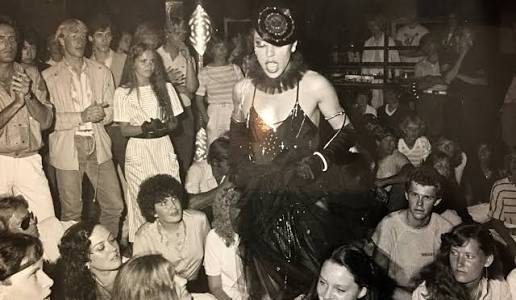
For five extraordinary years, Club Trocadero turned a basement on Adelgatan into one of Sweden’s most talked-about nightlife destinations. Celebrities, drag queens, business people, artists, royalty and ordinary Malmö residents danced beneath mirrors and zebra stripes. Then, almost as dramatically as it had arrived, the party ended.
There are nightclubs that people remember.
And then there are nightclubs that become part of a city’s mythology.
In Malmö, Trocadero – affectionately known as “Troccan” – was the latter.
For a relatively small city at the time, Malmö suddenly had something that felt astonishingly international. You could walk into the historic Tunneln premises on Adelgatan and, for a few hours, forget that you were in southern Sweden. The outside world could be grey, conservative and distinctly Scandinavian. Inside, it was glitter, champagne, disco, drag shows, celebrities, mirrors, leopard patterns and people who had decided that ordinary rules could wait until Monday.
Club Trocadero officially opened on 9 February 1979. Its spectacularly short but intense life ended in March 1984.
Five years.
That was all it took to create a legend.
From an old basement to Malmö’s Studio 54
The man behind the phenomenon was Lars Hector, a Malmö entertainment personality who understood something important about nightlife: people don’t necessarily go out merely to drink. They go out to become somebody else for a few hours.
Hector wanted Trocadero to be different. His ambition was to create a place without the usual segregation of nightlife – gay and straight, young and older, famous and unknown, glamorous and eccentric. Everybody could share the same dance floor.
The idea was revolutionary for Malmö in the late 1970s.
The inspiration came partly from international nightlife, including places in New York, Hamburg and Barcelona. The comparison with Studio 54 became inevitable.
But Trocadero wasn’t a Swedish copy of Studio 54.
It was something considerably more Malmö.
And considerably more outrageous.
Enter Abbe
If Lars Hector was the ringmaster, architect and scenographer Abelardo “Abbe” Gonzalez was responsible for much of the visual magic.
Gonzalez transformed the basement into an extraordinary fantasy world using mirrors, aluminium, gold details, zebra patterns and theatrical elements. A long entrance passage was designed almost like a railway carriage, with strange windows and portraits of famous revolutionaries, politicians and stars decorating the walls.
The budget was reportedly modest and the deadline brutally short. Gonzalez has recalled that the project had to be designed around the materials and craftsmen available during the Christmas period – essentially a metalworker and a mirror maker.
The result was anything but modest.
The finished Trocadero was glamorous, theatrical and slightly absurd – precisely the combination that made it work.
ArkDes has subsequently described Gonzalez’s Trocadero design as a groundbreaking new type of inclusive environment, with zebra patterns, mirrored walls and gold forming an unusually spectacular late-1970s interior.
In other words, the nightclub itself was already part of the show.
Where everybody was somebody
The magic of Troccan wasn’t simply the décor.
It was the people.
Trocadero became a meeting place for Malmö’s gay community and a much broader audience. It was particularly significant for people who didn’t feel comfortable in conventional nightlife.
Lars Hector later recalled the club as a place where directors, celebrities, drag queens, fetishists, gay men, lesbians, bisexuals and straight people could all occupy the same glamorous universe.
And the guest list was extraordinary.
Anita Lindblom, Git Gay, Tommy Körberg, Kal P Dal, Jacques Werup, Birgitta Trotzig, Lasse Söderberg and Annalisa Ericson were among the famous names associated with the club. The Trocadero archives also recall visits from stars including After Dark and Anita Ekberg.
Then there was Merry Lou.
The legendary hostess and performer became one of Trocadero’s defining characters. She was a larger-than-life presence, famous for her performances and particularly her interpretations of Zarah Leander.
One contemporary recollection puts it rather perfectly: Merry Lou could interpret Zarah Leander “better than Zarah Leander herself.”
Whether you agreed with that assessment after a few drinks is another matter.
Drag, disco and a little bit of madness
The resident drag group Dragkedjan was another crucial part of the Trocadero experience.
And the soundtrack was pure late-1970s/early-1980s nightlife.
Donna Summer.
Grace Jones.
Sister Sledge.
Michael Jackson.
ABBA.
David Bowie.
Chic.
Village People.
When “YMCA” came on, nobody needed instructions.
The dance floor became an unofficial democratic experiment: executives and artists, gay men and straight couples, celebrities and people who had arrived without anybody knowing their name all danced together.
And that, perhaps more than anything, was Trocadero’s secret.
You didn’t simply visit Troccan.
You participated in it.
The cat was welcome too
One of the most enduring pieces of Trocadero folklore is the club’s famously relaxed attitude toward who – or what – could enter.
The club’s own historical material famously recalls that you could apparently even come with your cat if you wanted to.
Whether Malmö’s feline population actually took full advantage of this liberal door policy remains a matter for historians.
But the story captures the spirit perfectly.
Trocadero wasn’t interested in making everybody behave.
It was interested in making everybody feel welcome.
When Anita Lindblom arrived
One of the turning points came when Anita Lindblom performed at the club.
According to Lars Hector, the appearance suddenly pushed Trocadero into national attention. Until then, Malmö’s nightlife revolution had largely been happening under the radar of the major national media.
Suddenly, the rest of Sweden began to understand what Malmö already knew.
Something unusual was happening beneath Adelgatan.
Trocadero wasn’t merely a nightclub.
It had become a cultural statement.
The celebrities came – and so did everybody else
The extraordinary thing was that Trocadero managed to combine exclusivity with openness.
There were VIP tables.
There were celebrities.
There was a piano bar.
There were limousines.
But there was also an audience that simply wanted to dance.
When After Dark performed in Malmö, a limousine reportedly waited to take the group to Trocadero afterwards.
Imagine the scene.
The show finishes.
The performers step outside.
A limousine is waiting.
Destination?
A basement nightclub in central Malmö.
And somewhere inside, somebody is already ordering another bottle of champagne.
That was Troccan.
The beginning of the end
But legendary nightlife is rarely sustainable.
Trocadero’s final chapter became dramatically darker in late 1983.
On 13 December 1983, Lars Hector was arrested on suspicion of tax offences. The resulting media attention and his time in custody severely affected the club. Hector was later acquitted, but the damage had been done.
The party machine had lost its engine.
Trocadero closed its doors in early 1984, with the club’s own historical archive giving 17 March 1984 as the final date.
And just like that, one of Malmö’s most extravagant eras was over.
But Adelgatan wasn’t finished
Perhaps the strangest thing about the story is that the spirit of Trocadero never completely disappeared.
The premises at Adelgatan continued to have an important connection with Malmö’s gay nightlife. Later clubs occupied the address, and in 1999 the Trocadero name itself returned for a period.
The building had become more than a nightclub address.
It was a piece of Malmö nightlife history.
Today, the location is associated with a restaurant rather than the wild nights of Troccan. But for those who remember the original club, the walls must surely still have stories to tell.
The legacy of Troccan
Why does Trocadero still matter?
Because it arrived at exactly the right moment.
The late 1970s were a period of enormous cultural change. Disco was exploding. Attitudes towards sexuality were changing. Drag and performance were becoming more visible. Young people wanted freedom, glamour and experiences that felt different from the everyday.
Trocadero gathered all of that under one roof.
It was nightclub, theatre, social experiment and fantasy palace.
And perhaps its greatest achievement was its refusal to insist that people fit neatly into categories.
You could be glamorous.
You could be eccentric.
You could be famous.
You could be nobody.
You could dance with whoever you wanted.
And for one night, at least, nobody cared.
That is why Trocadero remains legendary.
Not because it lasted for decades.
Quite the opposite.
It burned brightly, spectacularly and briefly.
Five years after opening its doors, the music stopped.
But the stories didn’t.
And perhaps that is the real measure of a great nightclub.
When the lights go out, the best ones continue to exist in people’s memories – in stories about the night Anita sang, the night Merry Lou stole the show, the night the celebrities arrived, the night everybody danced together, or simply the night when somebody did something so outrageous that nobody has quite forgotten it.
Trocadero was never just a place in Malmö.
For five extraordinary years, it was Malmö’s escape hatch.
And once you had been through that door, ordinary nightlife could never quite look the same again.